Showing posts with label Writing tips. Show all posts

Sunday, June 21, 2015

Voice

Voice is always this really vague concept that authors throw at you. Kind of like voice is something no one know how to harness and no one knows how to explain, but once you find it you'll know. There are a couple of things I've found that I can associate with voice.

Changing cliches to fit how your character would see it: 

This one is from the point of view from a twenty-three year old woman:
My heart is beating so hard I think I might break my bra strap.  -- Paige Torn by: Erynn Mangum
See how she did that? Taking the simple, overused, highly-necessary description of the heart beating when scared and added the breaking-of-the-bra-strap detail to make it fresh and different.

Little details that only your character would notice: 

This is from the same book, same character.
I was watching Flynn Anderson--who had no similarity to Flynn Rider from Tangled--wrestle with our copier. -- Paige Torn by: Erynn Mangum
Not everyone would associate the name Flynn to a movie. It's just the way Paige interprets things.

Take your character's age into mind: 

This is from To Kill a Mockingbird, in which the main character is an eight year old girl:
Mr. Avery was red in the face from a sneezing spell and nearly blew us off the sidewalk when we came up. --To Kill a Mockingbird by: Harper Lee 
The way she said it gave you an idea of her age, considering that she's small and tends to over-exaggerate things. 

Using similes based on events that only in your story: 

This is from To Kill a Mockingbird, too, in which the Radleys are people who never come out of their house:
Every wood door in the neighborhood was shut as tight as the doors of the Radley Place. --To Kill a Mockingbird by: Harper Lee
 This one is referring to a person she thinks is incredibly uninteresting:
This thing has more personality than Peter and his parents combined. -- Paige Torn by: Erynn Mangum
Dialect: 
I asked her why the roads were red and she said she didn't know and for pity's sake, not to ask her anymore questions. -- Anne of Green Gables (the movie)
I imagined how it would be: when it happened, he'd just be sitting in the swing when I came along. "Hidy do, Mr. Arthur," I would say, as if I had said it every afternoon of my life. "Evening, Jean Louise," he would say, as if he had said it every afternoon of my life, "right pretty spell we're having isn't it?" "Yes sir, right pretty" I would say and go on. -- To Kill a Mockingbird by: Harper Lee

Wednesday, April 22, 2015

We can all learn from Fairytales

Isn't this an awesome poster? I LOVE it. 
My opinion is you're never too old for a good old-fashioned fairytale. Ella watched Beauty and the Beast for the first time and as I was watching it with her, I noticed some things that interested me. The thing about children's stories and fairytales, is that they're simplified enough that it paints a perfect picture of a good storyline. The plot twists might be easy to predict and the dialogue may be cliche, but underneath all that is a solid story. 

Couple good points to notice: 

Sacrificial main character: 
In the beginning Belle gives herself up for her father and stays with the Beast while her father goes free. It makes her loveable. You look up to her and admire her for her courage.

The love interest's flaw: 
I'm struggling with this one. Every character should have some sort of flaw. Yes, even the love interest. You don't want him/her to be perfect. People are more attracted to people who aren't perfect. Ever read a book where there's a perfect character and it totally ticks you off? This movie did a cool twist with having the love interest also be a villain of sorts. 
The love interest's endearing nature: 
Look how cute he is! Is it just me, or is he better as a beast, than a prince? As flawed as the love interest might be, give him/her something to love. Because you want your reader to fall in love with them just like your main character. 

A hateable villain:

I don't think there's anyone who doesn't find Gaston's conceited nature annoying. Often it's good to give your villain a good trait too. Supposedly, he's dashingly handsome (kind of hard to tell for a cartoon,) but that fact is overruled by his total obsession with himself.
A believable love story: 
Belle begins off by hating the beast for keeping her at the castle. But as time goes on and he tries to be a gentleman, and she begins to see things in him. After him yelling at her a couple of times, and her running off and him saving her life, etc, she begins to fall in love.
The Beast knew from the beginning that she may be the one to break the curse. He's watching her and he feels something come over him and he wants to do something for her. So, he gives her his library. And eventually she teaches him thing, manners, how to read, how to feed birds without scaring them off. And he begins to fall in love.


Have you ever watched  this movie? Anything else stand out to you? 

Tuesday, April 7, 2015

Writer's Block

I'm watching Anne of Green Gables and Gilbert said something that struck me as profound.
You can mope and cry all you want, but it won't help you write a better novel. 
I once heard someone classify different types of writer's block. One of the ones that I frequently suffer from is Lazy Writer's Syndrome (LWS.)

  • Jessi Roberts suggested to ask "What if?" to jump start a plot. What if so-and-so died? What if they got engaged? What if the dragon didn't die like everyone thought? 
  • Or just sit your butt down and force the story from your brain to your fingertips. 
  • One thing I like to do is change the font color to white and don't even see what I'm writing and let my instincts carry it away. No one has to see it. You can edit later.
  • Even if you're the pansters to top all pansters, sometimes you should try plotting. Or if your a plotter to top all plotters, try writing by instinct. 
  • Talk to other writer's friends and ask their opinions. NaNoWriMo is a great place to do that and they're having a virtual summer writer's camp for free, here

Sunday, March 22, 2015

Foreshadowing

If ever there were an amazing example of foreshadowing, Hugo would have to be number one. There are probably even instances that I didn't even notice, because I wasn't watching it fully.                      

Foreshadow| verb: to give a suggestion of (something that has not yet happened)
                : to represent, indicate or typify beforehand: prefigure 


I'll give you a couple of examples from this movie and then maybe you can see what types of foreshadowing you can put in your story.

So, here's the basic premise of Hugo. Hugo lives in a clock in a train station in London. His father has died and his drunk uncle has abandoned him after teaching him how to wind the clocks. His life's goal is to find out why his father died and he plans on doing that by fixing the automaton that his father never finished before he died. It's a writing automaton and he's convinced that the note it writes will be a message from his father.

The movie
The real life situation
Foreshadowing example #1: Hugo's father always used to take him to the movies and so, when he meets a girl who has never seen the movies, he sneaks her into a movie theater and shows her what a movie looks like. In the movie, a man is trying to climb a wall and loses his balance and grabs the nearest thing, the minute hand of a nearby clock and he dangles. Later in the movie, when Hugo is attempting to get away from someone, he inches out the window in a clock and grabs hold of the minute hand and he dangles, waiting for the danger to pass.

Foreshadowing example #2: Hugo is having a dream. He's walking next to the train tracks and on the slats he sees a key. And not just any key. It just so happens to be the key that operates the automaton that he's finally fixed. He jumps onto the tracks and is turning the key over and over and wondering what it's doing on the tracks and the tracks start shaking and the train is barreling toward him. Later, in real life, the automaton falls onto the tracks and the train is pulling in and Hugo jumps onto the tracks to retrieve it, the tracks shaking and the train barreling toward him.

Foreshadowing can enrich your novel and add depth. It's also a pleasant surprise to re-read a book and look at those little tidbits and realize, "Oh, that's what they meant."

Friday, March 20, 2015

Motivation

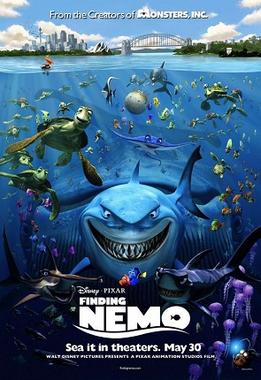
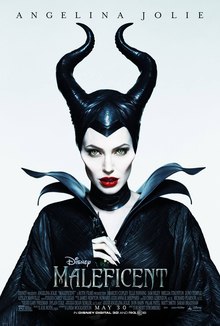
What do Finding Nemo, Spiderman and Maleficent have in common? I know, a total cliche to opening a blog post, but I couldn't help myself. So, think away readers, and contemplate my deep question...
Hint: The title has something to do with it...

Each of them have exceptional character motivation that we all can learn from. I'll make sure to warn you if there are any spoilers in case you haven't watched one of them. 

A couple of types of motivation for characters that are believable: 


1. Fear, with a legitimate root. In Finding Nemo Marlin is afraid of two things. The ocean and losing his only family, his son, Nemo. Why? At the beginning of the movie in a prologue of sorts, Marlin is a newlywed moving into his new home with his wife, Coral, and his four-hundred-plus eggs. As they're watching their babies sleep, Coral remarks casually that she wants to name one of the fish Nemo. Mere minutes later, a barracuda attacks, knocking Marlin out. When he comes to, Coral and all of his children are gone, except for one egg that got knocked to the ocean floor and forgotten. And he names the fish Nemo. As a result, Marlin is overprotective of Nemo and doesn't let him do anything that could be possibly risky. 

2. Being too sheltered: This one's also from Finding Nemo. His father's overprotectedness prompts Nemo to chafe under the short leash. After his dad yells at him and embarrasses him in front of his friends for almost doing something against what his father had taught him, he break the rules, resulting in him getting captured. 

3. Revenge: Sometimes this can feel forced, unless you do it right. Maleficent does this incredibly well. Maleficent has been betrayed by the person that she thought was her true love. So, as a result she storms the castle that he lives in and casts a curse on his firstborn daughter, Aurora, that "before the sun sets on her sixteenth birthday, she'll prick her finger on a spinning wheel and fall into a sleep like death."

4. Power hungry: Again, be careful with this one. This can be super unbelieveable and cliche if the character doesn't have a good reason for wanting power. This one is again, excellently shown in Maleficent. Stefan meets Maleficent when they're both young and points out the castle that exists where he lives. "See that castle?" He says. "Someday I'm going to live there." Maleficent asks him where he lives now. He looks down for a second and finally admits, "A barn." After a bit more prompting she gets out of him that he's an orphan, and homeless, but someday he wants to rule. This later prompts him to betray Maleficent's trust in order to get the throne.

5. Something wakes them up: In Spider-Man, after Peter finally figures out about his powers, he intends to use them to get the attention of the girl he likes. He goes to a wrestling match with the hopes to win $3000 to buy a car that will impress his lady. He knows he can win. Right before he goes, his uncle pulls him aside and gives him a talk about using what you have to help people. "With great power comes great responsibility." Peter yells at his uncle to stop acting like he's his father and leaves. After the match the man refuses to pay him the amount he feels is due to him. "I fail to see how that became my problem," he says. "Now get out." So, Peter stalks out of the office. As he is walking away, a man walks into the office and holds the man at gunpoint, demanding all the money. The theif runs past Peter, and he has an opportunity to stop him, but he doesn't. Just lets him go. When the money man asks him why he didn't do anything to stop the theif, Peter simply says, "I fail to see how that became my problem." And he leaves. SPOILER: As he leaves the building, he sees a crowd of people and pushes through it. His Uncle Ben is on the sidewalk, bleeding from a wound in his chest. A man had shot him and stolen his car. Later Peter realizes that it was the theif that he had let pass at the wrestling match. If he had only stopped him....SPOILER END In the end, he remembers what his uncle had said, and begins to do things for people to help.

I'd suggest watching these moves and noticing different character motivations. I haven't nearly covered all of them. Are there any movies you've seen that have exceptional character motivation?